
My E-Course is Live! How to Make Money as a Microinfluencer!
One of my most popular posts last year was all about how I make money as a microinfluencer. I gave you guys an overview of all my tips for working with brands and getting paid, and I got a ton of follow up questions after that post. I decided to really dive into some of the questions that were asked the most, along with some of the things I thought were super important to know. I’m so happy to announce I finally launched my first ecourse – The Ultimate Guide to Monetizing Your Blog!
This guide is designed for microinfluencers to help you maximize your earning potential and start working with your dream brands. I started working on paid brand collaborations when I had less than 5k followers so I’m spilling the tea on how you can too! I am also writing this not just from my perspective as a blogger, but also from my extensive background as a marketing manager. I have worked with huge brands and small and managed influencer and celebrity campaigns at pretty much any level you can imagine. So I know what I’m talking about when it comes to this stuff, and I’m here to help you with your road map to blogging success!
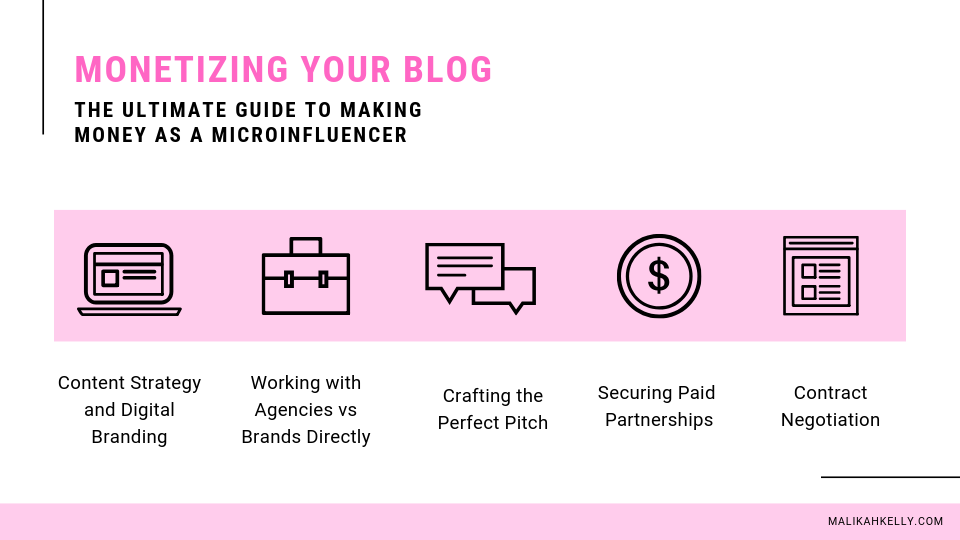
Here is a chapter by chapter breakdown of what’s you will see in the course!

1. Branding Yourself as an Influencer
This chapter is all about how to position yourself as an influencer, define your niche and the type of content you want to create.
2. How to Grow Your Audience
Here we go into several different approaches to growing your audience across platforms and how to diversify your platforms for maximum impact.
3. Partnering with Agencies vs Brands Directly
In these 2 chapters I explore the differences between working with agencies/influencer networks and brands directly. I also share feedback from decision makers at several of the leading agencies and brands I’ve worked with on how you can succeed as an influencer and nail your campaigns.
4. How to Negotiation an Influencer Contract
The more business you bring in, the more versed you need to be in negotiating the best deal. In this chapter I go over how to interpret an influencer agreement, common terms and what they mean, and tactics to make sure you are getting the best rate.
5. Other Ways to Generate Income
And finally, I go over some ideas and strategies to maximize your earnings through other streams of income, not just sponsored posts with brands.
I’m releasing this just in time for the holiday season, which is when most brands activate influencers for campaigns so it’s the perfect time for you to get started earning those coins! My course is live on Teachable and you can access the Basic Edition for only $20! If you want more personalized support the VIP Edition is yours for $75 which includes the course and a follow up strategy call. In the call I’ll give you the opportunity to address any pending questions or areas you need more support with to get started.
Check it out on Teachable if you are ready to get started!

When Did Influencers Become Public Enemy Number One?

Being a digital influencer is one of the most talked about new career paths of the past few years. As social media exploded and brands began directing significant portions of their budgets towards influencer marketing, more and more people began entering the industry with hopes of becoming Insta-famous. The market is so saturated and there is so much competition, not unlike other highly in-demand fields. However it seems that no other legitimate profession is met with such vitriol.


It seems like every day there is another negative news story about influencers. In the past week you may have seen headlines about “influencers” taking inappropriate photos at Chernobyl, but when you read the articles and click on the photos in question, it’s obvious the photos were taken by normal tourists, not influencers. When Payless had a marketing stint pretending to be a high-end boutique “Palessi,” so many headlines focused on how influencers were duped into wasting money on cheap shoes. There was almost no mention of the fact that influencers in attendance were invited and in some cases paid by the brand for their participation! They were just independent contractors doing a job they had been hired for, yet the mass media ran with the negative coverage. Instead of focusing on the brilliant event that Payless threw, it became all about how silly and shallow influencers are. And not to mention Marissa Fuchs’s “surprise” proposal, which went viral for all the wrong reasons. In my opinion, she came up with a brilliant way to create some fresh content that hadn’t already been done to death, and professionally pitched the business opportunity to brands. I find it hard to imagine a world in which marketing professionals would publicly share and make fun of a pitch deck that had been sent to them confidentially by a media agency or other brand. Why should an influencer (especially one with legitimate reach and a highly professional pitch and marketing strategy) be treated differently?
One of the biggest examples of influencer hate came out around the Fyre Festival scandal, and resurfaced with the Netflix and Hulu documentaries this year. So much focus was on how influencers promoted the event and convinced their followers to attend, but none of the drama was their fault! They were presented with a paid opportunity that many of their colleagues were also involved in. All of the influencers that posted were managed by big, experienced teams that would vet any potential partnership. The only mistake made in many cases was that some of the influencers failed to disclose that they were paid for the promotion.
However, the Fyre Festival case really only proves that influencer marketing works! The goal of tapping talent in a coordinated effort was to sell tickets, and that is exactly what they did. A consultant or independent contractor wouldn’t necessarily have access to the logistics and details of the event, and their obligation ended with them posting when asked.
I’m not a full-time influencer and don’t aspire to be, but I can’t help but notice the amount of hate and criticism directed at people that are essentially entrepreneurs building their own personal brand. Yes, there are a lot of influencers with loose ethics that are dishonest with their audience and brand partners, but is there any industry that is completely free from corruption?
If you are someone that loves to hate on influencers, I would LOVE to know why that is! And if you are an influencer and feel like you get a lot of unfair criticism and hatred, let me know why you think that is and how you handle it!